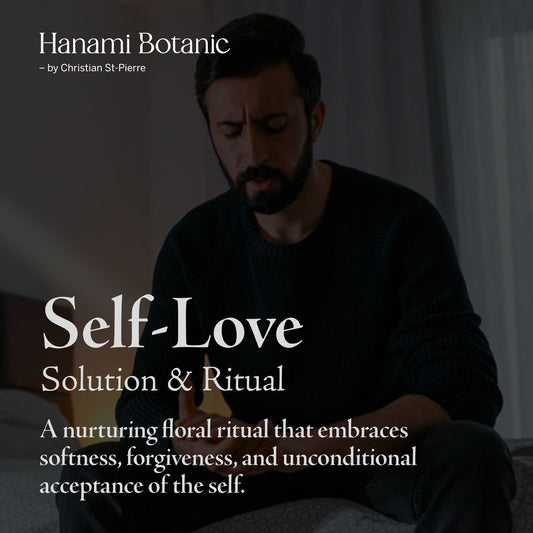
A Simple and Effective Ritual to Love Yourself a Little More
Christian St-PierreWe talk a lot about self-love as if it were some theoretical ideal, but very rarely as a concrete gesture woven into everyday life. In reality, most of us move through our days already tired, racing against the clock, with an inner voice that spends more time criticising than supporting us. In that context, “loving yourself” quickly sounds hollow or guilt-inducing, something we’re supposed to feel naturally, even though, in truth, it’s something we practice.
I see self-love not as a magical state but as a small, repetitive ritual that, over time, quietly reshapes the way we see ourselves. Nothing extraordinary, nothing to show off online. Just a gentler, more honest way of being present with ourselves in the ordinary flow of a day.

Returning to Yourself Without Judgment
The ritual begins with something very simple: asking yourself honestly how you’re doing. Not “how I should be doing,” not “what others expect of me,” but: in what state do I actually find myself this morning, right now, in this moment?
It can be done in a single minute, sitting on the edge of the bed, in the kitchen, or even in the car before driving off. The idea is simply to scan what’s happening inside: your energy level, the tension in your body, the quality of your breath, the mood that’s there. You’re not trying to analyse or dramatise anything. You’re just noticing. And that gesture alone is already a form of respect: instead of launching yourself into the day on autopilot, you acknowledge what you’re living.
This return to yourself, without commentary, opens a small doorway. You’re no longer just enduring your day, you become, even slightly, the subject of what comes next.
Adjusting the Inner Voice
Once you’ve acknowledged your state, you can start paying attention to the way you speak to yourself. For many of us, the inner soundtrack is harsh: reproaches, “you should have,” “it’s not enough,” “you’ll never manage this.” Over time, we get used to this voice, even though it’s often exhausting and unfair.
The idea isn’t to lie to yourself or repeat positive sentences that don’t feel true. It’s simply to check whether what you’re telling yourself is actually helpful. You can ask one simple question: is the tone I’m using with myself right now giving me a bit of courage, or taking it away?
If the answer is no, you can try shifting the tone slightly. Instead of “come on, move, you’re not allowed to be tired,” you might say, “yes, you’re tired, but you can move forward in small steps.” The content stays honest, but the atmosphere changes. You move from pressure to support. And over time, this shift in inner tone becomes one of the foundations of self-love.
A Concrete Gesture That Says “You Matter”
What comes next is a very simple gesture, chosen just for you, that sends a clear message to your body: “I’m not abandoning myself.” It doesn’t need to be long, spectacular, or costly. It might be a few deep breaths in front of an open window, a five-minute walk outside, slowly drinking a glass of water while allowing yourself a real pause, or stretching just enough to loosen your back and neck.
What matters isn’t the exact form of the gesture, but its intention: instead of pushing through what you feel, you take a moment to support yourself. The body doesn’t respond to theories, it responds to actions. A small gesture repeated each day gradually teaches it that its fatigue, its tension, and its needs are no longer being dismissed.
A Small Promise You Actually Keep
For this ritual to be more than symbolic, I like adding a tiny promise to myself for the day. Not a list of resolutions or a personal transformation plan, just one concrete thing I commit to doing for myself, something I actually have the means to follow through on.
It might be deciding to go to bed a little earlier, having a real meal instead of grabbing bites on the run, finishing a small task I’ve been putting off for too long, or saying no to something that clearly goes beyond my limits. What matters is that it’s specific, human, and doable within the day ahead.
What nourishes self-love isn’t how many promises we make to ourselves, it’s how many of them we truly keep.
Closing the Loop at the End of the Day
In the evening, even when you’re tired, it’s possible to take a few seconds for one last gesture: remembering what you did for yourself that day. Just one thing. Sometimes it will be something small. Sometimes it will matter more. It doesn’t make a difference.
This small recap helps anchor the idea that, even on a difficult day, you didn’t vanish from your own field of attention. You took a moment to notice yourself, to speak to yourself differently, to take a supportive action, to keep a promise. It’s subtle, but with repetition, it begins to change the relationship you have with yourself.
What This Ritual Builds, Deep Down
This ritual isn’t magical. It doesn’t guarantee permanent happiness or perfect self-esteem. But it does create a different dynamic: instead of waiting to “feel better” before finally loving yourself, you begin to love yourself a little more so that, gradually, you can feel better.
Through these small steps, noticing yourself, softening your inner tone, taking a concrete supportive action, keeping a tiny promise, acknowledging the effort at night, you build something very simple yet deeply valuable: the repeated experience that you can rely on yourself. And that is often where self-love truly begins, not in a grand feeling, but in this quiet, daily realization that you no longer let yourself fall so easily.