Dendrobium griffithianum: Flowering Cycle, Seasonal Rest & Personal Notes
Christian St-PierreDendrobium griffithianum: notes from growing a seasonal mountain species
Dendrobium griffithianum is an orchid that demands respect for its timing. It is not a plant that rushes, and it certainly isn’t one that flowers by accident. For much of the year, it remains quiet and restrained, with upright canes and a somewhat austere presence. Then, when flowering finally begins, the change is striking.
In my collection, this is an orchid I’ve learned not to interfere with. It responds strongly to seasonal cues, temperature shifts, and water management. More than many other Dendrobium species, it has taught me the importance of respecting phases: active growth, cane maturation, rest, and finally bloom.


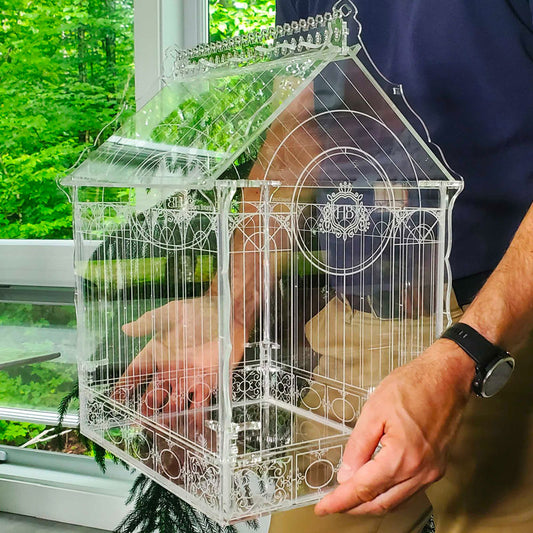
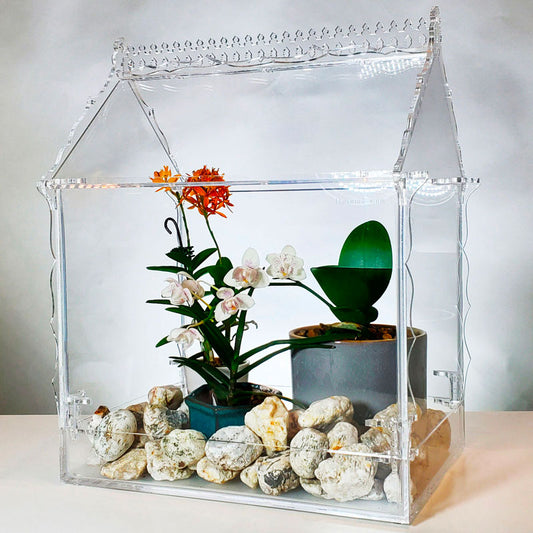
When flowering starts, I sometimes bring the plant indoors and place it in a terrarium. Not to alter its care, but simply to extend the life of the flowers and enjoy them longer. This step is not what makes it bloom; it’s only a continuation of a cycle that has already been handled correctly earlier in the season.
What I appreciate most about Dendrobium griffithianum is the clarity of its rhythm. When you listen to it and resist the urge to push, it rewards patience with a bloom that feels earned rather than forced.
Origin and habitat
Dendrobium griffithianum originates from montane forests of the eastern Himalayas and surrounding regions, including parts of northeastern India, Myanmar, and adjacent areas. In nature, it grows at moderate to higher elevations, where conditions are defined less by heat and more by seasonality.
These habitats experience a clear annual rhythm:
- Warm, wet summers that drive active growth
- Cooler, drier winters that slow the plant down and allow canes to mature
- Bright but filtered light, with frequent air movement
The plant grows as an epiphyte, attached to tree branches where water is abundant during the growing season but never stagnant. Roots are exposed to rapid wet–dry cycles, and nights are consistently cooler than days, especially outside the peak of summer.
Understanding this environment explains much of its behavior in cultivation. Dendrobium griffithianum is not adapted to constant warmth or year-round watering. It expects a pause, and without that pause, flowering becomes unreliable.
This natural rhythm is something I try to respect rather than override. I don’t treat it like a warm, evergreen Dendrobium. Instead, I grow it as a seasonal mountain species, allowing growth to slow naturally and resisting the temptation to “help” when the plant is clearly resting.
That respect for origin, cooler nights, a drier winter phase, and restraint, has been far more important to success than any single technical adjustment.

How to grow Dendrobium griffithianum: Care guide
Summary
- Scientific name & family: Dendrobium griffithianum (Orchidaceae)
- Plant type: Epiphytic, deciduous or semi-deciduous Dendrobium
- Light: Bright light with gentle sun; brighter than many mini epiphytes
- Temperature: Intermediate to cool-intermediate, with cooler nights
- Watering: Abundant during growth, sharply reduced during winter rest
- Humidity: Moderate to high, always paired with good air movement
- Mounting / potting: Mounted or potted in a very free-draining mix
- Fertilization: Light but regular during growth; stopped during rest
- Blooming: Late winter to spring, often on mature leafless canes
Understand what it is in nature (this explains everything)
This is a seasonal Dendrobium from montane regions. That single fact explains almost every success or failure in cultivation.
In nature, Dendrobium griffithianum grows vigorously during the warm, wet months. Canes elongate, leaves develop, and the plant stores energy. Then conditions change: rainfall drops, nights cool, and growth slows to a near stop. Flowering comes after this pause, not during active growth.
Once I truly accepted that this orchid needs a real seasonal shift, everything became simpler. I stopped trying to keep it “happy” year-round and instead focused on letting it follow its own internal calendar.
Light
I grow Dendrobium griffithianum in bright light, brighter than my cloud-forest miniatures, but without harsh, all-day direct sun.
- During active growth, it benefits from strong light to mature the canes properly
- Insufficient light often leads to tall, healthy canes… and no flowers
That said, I avoid extreme heat. Brightness matters more than intensity. Morning or late-day sun works well; burning midday exposure does not.

Temperature
Dendrobium griffithianum is best treated as an intermediate to cool-intermediate, seasonal species. In habitat, it experiences warm, wet summers followed by cooler, drier winters, and this contrast is essential for flowering.
In cultivation, I aim for the following ranges:
During active growth (spring–summer):
- Day: 22–28 °C (72–82 °F)
- Night: 16–20 °C (60–68 °F)
These conditions support strong cane development and proper maturation, especially when paired with good light and regular watering.
After cane maturation and during the rest period (autumn–winter):
- Day: 18–22 °C (64–72 °F)
- Night: 10–14 °C (50–57 °F)
The cooler nights during this phase are critical. This temperature drop, combined with reduced watering, is what signals the plant to prepare for flowering. Warm nights through winter often result in healthy growth but little to no bloom.
In my own growing conditions, maintaining this clear day–night contrast, especially cooler nights in winter, has made flowering far more reliable than increasing light or fertilizer.
Watering
Watering is where most mistakes happen.
-
During active growth:
I water generously and regularly. The plant should never stay dry for long while canes are growing. -
After canes mature:
Watering is reduced significantly. Not stopped entirely, but restrained. The goal is to slow the plant down, not desiccate it. -
During winter rest:
Very light watering only, just enough to prevent severe shriveling.
This reduction is not optional. Without it, the plant may stay leafy and green… and skip flowering entirely.

Humidity + air movement
Moderate to high humidity is beneficial, but only if air is always moving. Stagnant moisture during cooler periods is risky.
I focus less on chasing high humidity numbers and more on keeping the environment fresh, airy, and stable.
Substrate / mounting
I keep the setup simple and fast-draining.
- Mounted culture works very well
- Small pots with a coarse, open mix also work
What I avoid:
- Oversized pots
- Heavy, water-retentive media
This is an epiphyte that wants wet–dry cycles, not constant dampness.

Fertilization
I follow the same fertilization philosophy I use for my other species orchids, adjusted for seasonality.
During active growth:
- Balanced orchid fertilizer (MSU-type), low concentration
- pH between 5.5–6.5
- Silicon, in small amounts
- Fresh seaweed extract, occasional
- Superthrive, very diluted and used sparingly
I feed lightly but regularly while the plant is growing. Once growth slows and the rest period begins, I stop fertilizing completely.
Feeding during rest works against flowering. For Dendrobium griffithianum, knowing when not to fertilize is just as important as feeding during growth.

How to reflower Dendrobium griffithianum
Reflowering Dendrobium griffithianum is not about stimulation or tricks. In my experience, it is almost entirely about respecting the plant’s seasonal rhythm and then staying out of the way.
This species flowers on mature canes that have completed their growth during the previous season. If the canes are strong, firm, and fully developed, the work is already mostly done.
What matters most:
-
Allow a true rest period
After cane maturation, watering must be reduced and nights must become cooler. This pause is essential. Without it, the plant may remain leafy and healthy but will often refuse to bloom. -
Maintain cooler nights in winter
Night temperatures in the 10–14 °C (50–57 °F) range have been key for me. This temperature signal, combined with drier conditions, initiates flower bud formation. -
Do not fertilize during rest
Once growth slows, I stop feeding completely. Fertilizing through the rest period tends to encourage vegetative activity at the expense of flowering. -
Avoid forcing with light or heat
Increasing light or warmth to “push” blooming usually backfires. This orchid responds better to restraint than intensity.
When the plant is comfortable and undisturbed, flower buds appear naturally along the canes, often without much warning.
After flowering
After blooming, I resist the temptation to make changes. I maintain moderate watering and return the plant to its normal growing rhythm as new growth begins. If I’ve brought the plant indoors to enjoy the flowers in a terrarium, it goes back to the greenhouse once flowering is finished, keeping conditions as consistent as possible.
Common mistake
The most common reason Dendrobium griffithianum fails to rebloom is skipping or softening the rest period. Too much water, warmth, or fertilizer in winter keeps the plant in growth mode and interrupts the flowering cycle.
With this species, flowering is not something to trigger, it’s something you allow to happen by respecting time, temperature, and restraint.

Varieties and similar plants
While Dendrobium griffithianum does not have widely recognized cultivated varieties, it belongs to a group of Himalayan and Southeast Asian Dendrobium species that share similar seasonal rhythms and growth habits. If you enjoy growing this species, there are several others that often appeal to the same kind of grower.
Closely related or comparable species include:
-
Dendrobium densiflorum
Perhaps the most frequently compared species. It shares the same pendulous flowering habit and seasonal rest requirement, though its flowers form denser, more compact clusters. -
Dendrobium thyrsiflorum
Very similar in overall structure and flowering behavior, with long, cascading inflorescences and a strong response to cool, dry winters. -
Dendrobium farmeri
Another species from similar regions, slightly more forgiving, but still reliant on a clear rest period to bloom properly. -
Dendrobium lindleyi (syn. aggregatum)
More compact, but with the same need for bright light and a pronounced winter rest to initiate flowering. -
Dendrobium jenkinsii
Smaller in scale, but shares the same seasonal logic: strong growth followed by a cool, dry pause to trigger blooms.
All of these species reward growers who are comfortable with seasonal care changes, especially the idea that less water and cooler temperatures are not neglect, but a necessary phase of the plant’s life cycle.
If Dendrobium griffithianum thrives in your care, these species are natural companions, each offering a different interpretation of the same Himalayan rhythm.
FAQ about Dendrobium griffithianum
Is Dendrobium griffithianum difficult to grow?
Not particularly, but it is very unforgiving of inconsistent seasonal care. The plant grows easily when warm and watered during active growth, but flowering depends on respecting a proper cool, dry rest period.
Does Dendrobium griffithianum need a winter rest?
Yes. A clear rest period is essential. Reduced watering, no fertilizer, and cooler nights are what trigger flower initiation on mature canes.
What happens if I keep watering it in winter?
The plant may stay healthy and green, but flowering is often compromised or completely absent. Continuous moisture and warmth tend to suppress bud formation.
Can it bloom more than once on the same cane?
Yes. Flowers appear on mature canes, and those canes should never be cut unless they are completely dead. They continue to support the plant and may flower again in subsequent seasons.
Does it need high humidity year-round?
During active growth, higher humidity is beneficial. During the rest period, humidity can be moderate, as long as the roots are kept on the dry side and air movement remains good.
Is it suitable for indoor growing?
It can be grown indoors temporarily, especially during flowering. I personally bring mine inside and place it in a terrarium so the flowers last longer, but long-term growth is better in a brighter, well-ventilated growing space.
Why does it produce growth but no flowers?
This is almost always due to one of three things:
- insufficient cooling at night in winter
- too much water during rest
- continued fertilization when the plant should be resting
Is Dendrobium griffithianum a good orchid for beginners?
It’s better suited to growers who are comfortable adjusting care seasonally. It’s not difficult, but it does require understanding when not to intervene.

About me
I’m Christian, and I’ve been growing orchids for many years, with a particular appreciation for species that follow a clear seasonal rhythm. Orchids like Dendrobium griffithianum are exactly why I enjoy this hobby: they require observation, patience, and the willingness to step back rather than intervene constantly.
My collection is organized around two complementary growing environments. A warmer greenhouse supports active growth during the growing season, while a cooler space allows species that require seasonal rest to slow down naturally. This separation makes it easier to respect each orchid’s cycle instead of forcing everything into a single set of conditions.
With Dendrobium griffithianum, this approach has been essential. Strong cane growth comes from warmth, light, and regular watering during the growing season, but flowering only happens when the plant is allowed a real pause, cooler nights, reduced watering, and time. When it blooms, I sometimes bring the plant indoors and place it in a terrarium so I can enjoy the flowers longer, without changing the care itself. Once flowering is finished, it goes back to the greenhouse to resume its normal rhythm.
Everything I share here comes from direct experience: what works in my conditions, what fails when I rush things, and what only becomes clear after several seasons with the same plant. I’m less interested in pushing orchids to perform than in learning how each species wants to grow, and letting it do so at its own pace.
References
-
Dendrobium griffithianum: Plants of the World Online (Kew)
Accepted name, basic taxonomic details, and native range (Assam to N. Indo-China).
-
Dendrobium griffithianum: OrchidRoots
Species overview including taxonomic status and distribution (Myanmar to Thailand).
-
Dendrobium griffithianum: OrchidSpecies (description & habitat)
Detailed species description, habitat notes, inflorescence and cultural hints (spring flowers, canes).
Conclusion
Dendrobium griffithianum is not an orchid that rewards constant attention or fine-tuning. It rewards understanding. In my experience, once its seasonal rhythm is respected, strong growth when it’s time to grow, followed by a true pause, it becomes a reliable and deeply satisfying plant to cultivate.
What I appreciate most about this species is its honesty. Healthy canes tell you immediately whether you’re on the right path, and flowering is never random. When blooms appear, they feel earned, the result of restraint rather than effort. Bringing the plant indoors during flowering simply allows me to enjoy the moment longer; the real work has already been done months before, in the greenhouse, by letting the plant live its cycle uninterrupted.
Grown this way, Dendrobium griffithianum becomes more than a seasonal bloomer. It becomes a reminder that orchids don’t need to be pushed to perform. They need space, time, and the confidence of a grower willing to wait.