Epithechea Ecuagenera: Blooming, Cultivation & Personal Notes
Christian St-PierreEpithechea Ecuagenera: a quiet hybrid with a strong presence
Epithechea Ecuagenera is not an orchid that immediately draws attention by excess or extravagance. At first glance, it feels balanced, almost restrained. But once it blooms, it reveals a personality that is both elegant and confident, with well-structured flowers carried effortlessly above the foliage.
What I appreciate most about this hybrid is its clarity. Everything about it feels coherent: the plant structure, the way the inflorescence emerges, and the rhythm of its growth. In my collection, it behaves like a calm and reliable orchid, one that doesn’t demand constant adjustment or correction.


There’s also something reassuring about growing an orchid developed by Ecuagenera, a nursery known for selecting parents that result in vigorous, adaptable plants. Epithechea Ecuagenera clearly reflects that philosophy. It bridges the gap between species-like behavior and hybrid resilience, making it pleasant to grow without feeling generic.
The flowers themselves are refined rather than flamboyant. They have presence without being overwhelming, and they last well when the plant is grown in stable conditions. It’s the kind of orchid that quietly earns its place in a collection, especially for growers who value structure, balance, and consistency over spectacle.
Epithechea Ecuagenera doesn’t try to impress at every moment, but when it flowers, it does so with assurance, reminding me that well-thought-out hybrids can be just as satisfying as botanical species when they are grown with intention.
Origin and background
Epithechea Ecuagenera is a man-made hybrid created by the Ecuadorian nursery Ecuagenera and registered with the Royal Horticultural Society (RHS). Its parentage is clearly established, combining Prosthechea citrina (50 %) and Epidendrum parkinsonianum (50 %), two species valued for their structure, fragrance, and adaptability.
What matters most to me is not the genetic formula itself, but the philosophy behind this hybrid. Both parent species originate from environments influenced by cloud-forest conditions and seasonal stability. This choice reflects Ecuagenera’s tendency to work with parents that tolerate intermediate temperatures, elevated humidity, and consistent growing conditions without becoming overly fragile.
In cultivation, Epithechea Ecuagenera clearly reflects this background. It doesn’t behave like a warm-growing, sun-loving Cattleya, nor like a strictly cool, delicate species orchid. Instead, it occupies a comfortable middle ground, showing traits inherited from both parents: steady growth, good tolerance of humidity, and an appreciation for gentle light and consistent airflow.
Historically, hybrids like this represent a more recent phase in orchid cultivation, one focused less on novelty and more on refinement and long-term usability. Rather than chasing extreme forms or exaggerated colors, the goal here is to preserve a species-like elegance while improving reliability and ease of cultivation.
Knowing this has shaped how I approach Epithechea Ecuagenera. I don’t treat it as a “performance hybrid” to be pushed for maximum size or constant blooming. Instead, I grow it much like a cloud-forest–influenced orchid: stable conditions, moderate light, regular care, and minimal stress. In return, it behaves exactly as intended, balanced, reliable, and quietly rewarding.

How to grow Epithechea Ecuagenera: Care guide
Summary
- Scientific name & family: Epithechea hybrid (Orchidaceae)
- Plant type: Epiphytic hybrid (Epidendrum alliance)
- Light: Medium to bright light, filtered
- Temperature: Intermediate, with a slight day/night difference
- Watering: Regular during growth, allowing the roots to approach dryness between waterings
- Humidity: Moderate to high, always paired with good air movement
- Mounting / potting: Best grown in pots with a well-draining epiphytic mix
- Fertilization: Light but regular during active growth
- Blooming: Reliable when grown in stable conditions, often seasonal
Understand what it is in nature (and why it matters)
Even though Epithechea Ecuagenera is a hybrid, its behavior clearly reflects Andean, cloud-forest ancestry. It does best when treated like a montane epiphyte rather than a warm, sun-loving orchid.
In practical terms, this means:
- No excessive heat
- No prolonged dryness
- No harsh direct sun
Stability and moderation are far more important than intensity.
Light
I grow Epithechea Ecuagenera in medium to bright filtered light. It appreciates good ambient brightness but reacts poorly to direct, hot sun.
For me, it fits well in the same light range as many intermediate Epidendrum-type orchids: bright enough to support flowering, but never pushed to the point of stress.
Temperature
This hybrid clearly prefers intermediate temperatures.
- Moderate days
- Slightly cooler nights
I don’t treat it as a warm grower. Excessive heat tends to slow it down rather than help it.
Watering
Watering is regular but controlled.
I water thoroughly, then allow the roots to approach dryness before watering again. The goal is to keep the root system active without suffocating it.
Constant wetness leads to weak roots, while prolonged dryness slows growth and flowering.
Humidity & air movement
Like most cloud-forest–influenced orchids, Epithechea Ecuagenera appreciates moderate to high humidity, but only when paired with constant air movement.
Good airflow keeps the plant healthy and allows higher humidity without issues.
Substrate & potting
This is an epiphytic orchid, and in my case, I grow it mounted rather than potted.
Instead of using bark or a traditional mount, I chose a simple piece of hardwood from my firewood pile. This isn’t something I would generally recommend, and it’s certainly not textbook orchid culture, but it’s what I had on hand, and in my conditions, it works.
What matters most is not the material itself, but what it provides to the roots:
- Air
- Stability
- Fast drying after watering
The roots attach well, dry quickly, and remain healthy as long as humidity and watering are consistent. This setup requires more attention to moisture management, but it avoids compaction entirely and keeps the root zone very open.
For most growers, a more conventional mount or a small pot with a well-draining epiphytic mix will be easier to manage. In my case, working with what I had, and understanding how the plant behaves, proved more important than following strict rules.
Fertilization
There are many fertilization strategies for orchids, and this is simply my own routine, the same base approach I use for several orchids in my collection. It may not suit every setup, but so far it works well for me.
I fertilize lightly but regularly during active growth, always at low concentration, and I never feed at every watering. I also flush periodically to prevent salt buildup, especially important since this plant is grown mounted.
My fertilization routine includes:
-
Balanced orchid fertilizer (MSU formula)
Used at low dose for its stable and complete nutrient profile. -
Water pH control
I aim for a pH between 5.5 and 6.5 to support proper nutrient absorption. -
Silicon
Added in small amounts to strengthen plant tissue and improve overall resilience. -
Fresh seaweed extract
Used occasionally, not systematically, as a natural source of micronutrients and growth regulators. -
Superthrive (very diluted)
Used sparingly, mainly during stress, recovery, or transition phases.
All of this is applied with restraint. I don’t try to push growth or flowering. With this hybrid, steady nutrition supports flowering far better than aggressive fertilization.
Once growth slows, I naturally reduce feeding rather than forcing continuity. Here again, consistency and moderation matter more than quantity.
Growth & blooming behavior
Epithechea Ecuagenera grows steadily and predictably when conditions are stable. Flowering tends to follow a natural rhythm rather than constant reblooming.
Once established, it proves to be reliable and easygoing, especially for growers who favor consistency over intervention.

How to reflower Epithechea Ecuagenera
Reflowering Epithechea Ecuagenera has proven to be quite natural in my conditions, as long as the plant is grown with consistency and restraint. This is not a hybrid that needs to be pushed or stressed to bloom again.
What matters most is keeping the plant stable and healthy over time.
1. Prioritize steady growth
Everything starts with balanced vegetative growth.
- Healthy leaves
- Active roots
- No interruptions caused by drought or excess heat
If the plant grows steadily, flowering usually follows without much intervention.
2. Light: enough, but not excessive
I don’t increase light to force reblooming. Instead, I maintain the same medium to bright filtered light year-round.
Pushing light too hard tends to dry the plant faster and adds stress, which is rarely beneficial for this hybrid.
3. Temperature: gentle contrast is enough
A slight day/night temperature difference is sufficient.
I don’t rely on strong drops or seasonal extremes. Moderate days and cooler nights seem to provide all the signal this orchid needs to initiate flowering.
4. Watering rhythm matters
I keep a regular watering routine.
- Never constantly wet
- Never completely dry for long periods
Erratic watering is one of the fastest ways to delay flowering.
5. Fertilization: support, don’t push
Once the plant has matured, I continue light fertilization during active growth and avoid heavy feeding.
Fertilizer supports flowering indirectly by maintaining plant health, it does not trigger blooms on its own.
6. After flowering
After blooming, I return to normal care without making sudden changes. I avoid repotting or relocating the plant unless absolutely necessary.
This hybrid responds best when it is simply left to follow its rhythm.
Common mistake
The most common reason for missed reblooming is instability: frequent moves, inconsistent watering, or trying to “improve” conditions too often.
When grown calmly and consistently, Epithechea Ecuagenera proves to be a reliable and rewarding bloomer, especially for growers who appreciate hybrids with a species-like temperament.

Varieties and similar plants
Because Epithechea Ecuagenera sits at the crossroads between species influence and hybrid resilience, it tends to appeal to growers who enjoy orchids that feel structured, calm, and reliable, without being overly demanding.
Within the Epidendrum alliance, several hybrids and species share a similar growth habit and cultural preferences. These plants generally appreciate intermediate temperatures, good humidity, and filtered light, much like Epithechea Ecuagenera.
Growers who enjoy this hybrid often also appreciate:
- Epidendrum species from Andean regions, for their upright growth and steady flowering habits
- Encyclia and related hybrids, especially those that prefer intermediate conditions and good air movement
- Psychilis-type hybrids, when grown in moderate light rather than full sun
- Species-like intergeneric hybrids developed by Ecuagenera, which often prioritize balance and adaptability over extreme traits
What these orchids have in common is a similar philosophy of growth: they respond best to consistency rather than intensity. None of them benefit from being pushed hard, and all reward growers who maintain stable conditions over time.
If Epithechea Ecuagenera feels comfortable in your growing space, these orchids are natural companions—plants that share the same quiet, dependable character.

Scent and presence
When Epithechea Ecuagenera begins to bloom, the fragrance gently fills the space around it with a soft, fresh floral aroma, reminiscent of citrus blossoms and warm summer evenings. The scent isn’t overpowering, it’s subtle and elegant, enhancing the atmosphere without overwhelming it, adding a sensorial dimension to its visual beauty.
I often notice this delicate perfume especially in the mornings or when the air around the plant is still, creating a sense of calm and presence that makes me want to pause and simply enjoy the moment.
 FAQ about Epithechea Ecuagenera
Is Epithechea Ecuagenera difficult to grow?
No. In my experience, it is a balanced and approachable hybrid, especially for growers already comfortable with intermediate-growing epiphytic orchids. Most issues arise from instability rather than difficulty.
Does Epithechea Ecuagenera need a rest period?
No true rest period is required. It prefers steady care year-round, with consistent watering and light. I don’t impose a dry or cool rest, as this tends to slow growth rather than help flowering.
What kind of light does Epithechea Ecuagenera prefer?
It does best in medium to bright filtered light. Direct, hot sun can cause stress, while insufficient light may reduce flowering. I avoid extremes and aim for strong ambient brightness.
How often should I water Epithechea Ecuagenera?
I water regularly, allowing the roots to approach dryness between waterings. Constantly wet roots weaken the plant, while prolonged dryness slows growth and flowering.
Does it require high humidity?
It appreciates moderate to high humidity, especially when paired with good air movement. That said, it is more forgiving than many cloud-forest species as long as airflow is consistent.
Is Epithechea Ecuagenera suitable for indoor growing?
Yes. It adapts well to indoor conditions provided there is adequate light, airflow, and a regular watering routine. It does particularly well in intermediate environments rather than hot, dry rooms.
Is this a good orchid for someone moving from species to hybrids?
Absolutely. Epithechea Ecuagenera is an excellent bridge between species-like behavior and hybrid resilience, making it a satisfying plant for growers who value structure and reliability.

I’m Christian
I’ve been growing orchids for many years, with a strong interest in species orchids and well-balanced hybrids that respect natural growth rhythms. Through observation, patience, and hands-on experience, I’ve learned that orchids respond best when they are grown with restraint rather than pushed for performance.
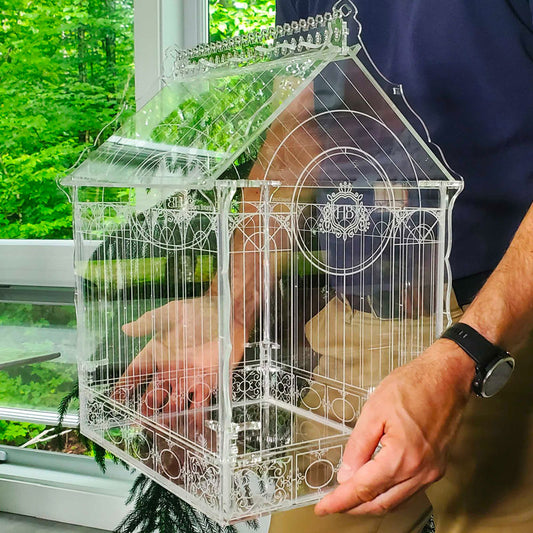
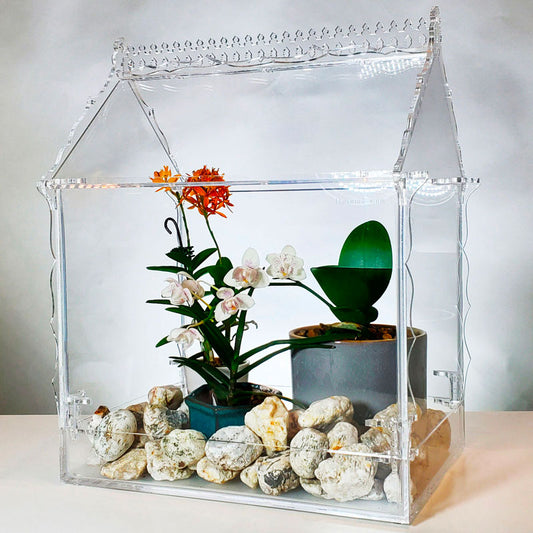
Alongside my personal collection, I design and build terrarium-style mini greenhouses inspired by Wardian cases. These environments are meant to provide stability, humidity, and airflow for orchids that benefit from controlled conditions.
If you have questions about cultivation or growing setups, feel free to reach out. I’m always happy to exchange with other growers and share what has worked in my own collection.
Conclusion
Epithechea Ecuagenera is a hybrid that succeeds through balance rather than excess. It doesn’t demand extreme light, heat, or intervention, but instead rewards growers who offer stability, moderation, and time.
What I value most about this orchid is its reliability. When grown in consistent conditions, it behaves predictably, grows steadily, and flowers without drama. It feels closer to a species orchid in temperament, yet benefits from the resilience that thoughtful hybridization can bring.
For growers who appreciate orchids with a calm presence and a clear structure, Epithechea Ecuagenera earns its place quietly, but convincingly, in the collection.