Comparettia speciosa: Blooming, Cool Conditions & Personal Notes
Christian St-PierreComparettia speciosa: small plant, oversized personality
Comparettia speciosa is one of those orchids that completely defies expectations. The plant itself is tiny, almost fragile-looking, but when it decides to bloom, it produces a long, elegant inflorescence covered in vivid orange-red flowers that feel wildly disproportionate to its size. That contrast alone is enough to make it unforgettable.

What I personally love about this species is its character. It clearly comes from cool, humid mountain forests, and you can feel it in the way it grows: compact, deliberate, never rushed. In my collection, it behaves like a true cloud-forest orchid, sensitive to dryness, appreciative of constant air movement, and happiest when humidity is high but temperatures stay moderate.
Another detail I’ve learned to respect over time: after flowering, I never rush to cut the spike. With Comparettia speciosa, it can sometimes rebloom from the same inflorescence, and patience is often rewarded. It’s an orchid that teaches restraint.
As for fragrance, opinions vary depending on the clone and growing conditions. Personally, I don’t perceive any noticeable scent from my plant. If a fragrance is present in some forms, it is subtle at best. I grow Comparettia speciosa for the intensity of its color, the elegance of its inflorescence, and the strong visual presence it brings to a very small space.
This is not an orchid that screams for attention year-round, but when it blooms, it absolutely owns the moment.

Origin and history
Comparettia speciosa originates from the Andean cloud forests of Ecuador, where it grows at elevations generally ranging from 1,000 to 1,500 meters. In its natural habitat, it lives as an epiphyte, clinging to moss-covered branches in constantly humid forests where mist, frequent rainfall, and moving air are part of daily life.
These environments are characterized by moderate temperatures, strong humidity, and filtered light rather than direct sun. Days are rarely hot, nights are noticeably cooler, and the atmosphere remains saturated with moisture almost year-round. Understanding this natural context explains a lot about how this orchid behaves in cultivation, and why it reacts poorly to dry air or excessive heat.


From a historical standpoint, Comparettia speciosa belongs to a genus that was described during the great wave of orchid exploration in South America in the 19th century, a time when European botanists and collectors were documenting the extraordinary diversity of Andean orchids. Unlike some “celebrity” orchids that were heavily hybridized early on, Comparettia speciosa remained relatively niche, admired mainly by collectors drawn to miniature species with dramatic flowering habits.
What fascinates me most is how clearly its morphology reflects its origin: the compact vegetative growth, the minimal pseudobulbs, and especially the long, arching inflorescence make perfect sense for a plant adapted to growing high in trees, where flowers must project outward to be visible to pollinators in dense forest layers.
Knowing where this orchid comes from has directly shaped how I grow it. I don’t try to force it into a “warm Cattleya-style” environment. Instead, I treat it like what it truly is: a cloud-forest specialist, adapted to stability, humidity, and gentle conditions rather than extremes.

How to grow Comparettia speciosa: Care guide
Summary
- Scientific name & family: Comparettia speciosa (Orchidaceae)
- Plant type: Miniature epiphyte (twig/branch epiphyte in very wet montane forests)
- Light: Medium light (bright shade; avoid hot direct sun)
- Temperature: Cool–intermediate to warm-intermediate (cloud-forest style; not “hot-house”)
- Watering: Keep even moisture, but let it approach dryness between waterings; mounted plants may need very frequent watering
- Humidity: Prefer high humidity with constant air movement
- Mounting / potting: Best mounted or in small pots with fine epiphytic mix; keep roots from going bone-dry
- Fertilization: Light but regular feeding during growth; avoid heavy salt buildup
- Blooming: Often blooms readily even on small plants; spikes can be long and showy

Understand what it is in nature (this explains everything)
In the wild, Comparettia speciosa comes from very wet mountain forests in SE Ecuador (Zamora-Chinchipe, Morona-Santiago), around 1000–1500 m. That’s basically “cloud-forest rules”: humidity, moving air, frequent moisture, and filtered light, not baking sun and not stagnant terrarium air.
Light
I treat it as medium light: bright shade, strong ambient brightness, but no hot direct sun on the leaves. If I push light too high, it can dehydrate fast (especially mounted).
Practical target (simple):
- Bright window light behind a sheer curtain, or
- LED/grow light intensity similar to “Oncidium-level” rather than Cattleya-level.
Temperature
This orchid is usually described as cool-to-warm / cool-intermediate depending on the source, which matches the idea of a montane epiphyte. I aim for moderate days and cooler nights, not extreme heat.
Watering
This is often where things go wrong. Comparettia speciosa needs consistent moisture, but it will not tolerate soggy or stagnant roots.
As you can see in my setup, I chose to grow my plant mounted on a rock with a thick layer of moss. This works very well in my case, but I do not recommend this approach for beginners. It requires precise control of humidity and watering. In my cool greenhouse, I rely on a reliable misting system that keeps the moss evenly moist without ever becoming waterlogged.
For growers without this kind of setup, there are safer and more forgiving options.
If grown in a pot:
- Water thoroughly
- Allow the medium to approach dryness, but not dry completely
- Use a fine, fast-draining epiphytic mix
This method is much easier to manage in a home environment and reduces the risk of dehydration.
If grown mounted:
- Expect very frequent watering
- Never allow the roots to stay dry for extended periods
- Best suited to high humidity environments with regular misting
My personal rule is simple: never let this orchid go “crispy dry” for long, especially when mounted. Stable moisture, adapted to your growing setup, is far more important than the exact method used.
Humidity + air movement (must be paired)
Comparettia generally wants regular watering year-round and does best with higher humidity, but it also has a reputation for being short-lived in cultivation if conditions drift (stagnant air, too dry, or stress after blooming). So I prioritize:
- higher humidity
- constant gentle airflow
- stable care (no big swings).
Substrate / mounting
Best options:
- Mounted on cork/slab with a small moisture-retaining pad at the roots (classic for the genus), or
- Small pot with a fine epiphyte mix / small bark that drains fast.
I avoid oversized pots, this is a twig epiphyte; it likes to dry and re-wet quickly.


Fertilization
There are countless fertilization approaches for orchids, and Comparettia speciosa is no exception. This is simply my own method, refined over time, and so far it has worked well for me.
Because this orchid is a miniature epiphyte, I keep feeding light but regular, always prioritizing root health over rapid growth. I never fertilize at every watering and I flush regularly to prevent salt buildup, which can be especially damaging to fine roots.
My current fertilization routine includes:
-
Balanced orchid fertilizer (MSU formula)
I use a low-dose MSU-type fertilizer for its stable and complete nutrient profile. -
Water pH control
I aim for a pH between 5.5 and 6.5, which supports proper nutrient uptake. -
Silicon
Added in small amounts to strengthen cell structure and improve overall plant resilience. -
Fresh seaweed extract
Used occasionally as a natural source of micronutrients and growth regulators. -
Superthrive (very diluted)
Not used systematically, but as a support during stress or recovery phases.
All of this is applied with moderation. The goal is not to push the plant, but to support steady, balanced growth. For a species like Comparettia speciosa, consistency and restraint matter far more than aggressive feeding.
This approach may not suit every setup, but within my growing conditions, it has proven to be reliable.
A small but important habit (my “collector” tip)
Because the inflorescence can be precious and sometimes rebloom from the same spike, I don’t cut it quickly after flowering unless it’s clearly drying out completely. (It’s a low-risk habit that can pay off.)

How to reflower Comparettia speciosa
Reflowering Comparettia speciosa is usually straightforward if the plant remains healthy and stable. In my experience, this species does not require a strict rest period or extreme environmental changes to bloom again.
The most important factor is consistency.
Key points for reblooming
- Light: Maintain medium, steady light (bright shade). Increasing light is unnecessary and can stress the plant.
- Watering: Keep a regular watering rhythm. Let the roots approach dryness, but never stay dry for extended periods, especially if the plant is mounted.
- Temperature: Moderate days with slightly cooler nights are sufficient. Strong temperature drops are not required.
- Humidity & air: High humidity paired with constant air movement supports long-term health and repeat flowering.
- Fertilization: Light, regular feeding during growth; avoid heavy or frequent fertilization.
After flowering
I avoid cutting the inflorescence too quickly. In some cases, Comparettia speciosa can rebloom from the same spike, so patience can be rewarded.
Common mistake
The most frequent cause of failed reblooming is stress: excessive dryness, heat, or repeated changes in environment. This orchid flowers best when it is simply left to grow steadily.
Varieties and similar plants
If you’re drawn to Comparettia speciosa, chances are you appreciate miniature orchids with dramatic flowering and a strong cloud-forest character. While true varieties of Comparettia speciosa are uncommon in cultivation, there are several closely related or comparable species that share a similar charm.
Within the genus Comparettia, other species show the same compact growth and long, showy inflorescences, though flower color and size can vary. They generally require similar conditions: medium light, high humidity, constant air movement, and regular watering without prolonged dryness.
Growers who enjoy Comparettia speciosa often also appreciate orchids from related Andean or cloud-forest groups, such as:
- Rodriguezia species, for their arching sprays of flowers and epiphytic habits
- Scaphosepalum, for miniature growth and preference for cool, humid environments
- Masdevallia, for their cloud-forest origins and sensitivity to heat
- Pleurothallis and Lepanthes, if you enjoy tiny plants with precise environmental needs
All of these orchids reward growers who favor stability, humidity, and finesse over force. If Comparettia speciosa thrives in your care, these genera are natural next steps to explore.
FAQ about Comparettia speciosa
FAQ // Is Comparettia speciosa difficult to grow?
Not particularly, but it is unforgiving of stress. As long as humidity, airflow, and watering are consistent, it grows and flowers reliably. Problems usually appear when conditions fluctuate too much.
FAQ // Does Comparettia speciosa need an orchidarium or terrarium?
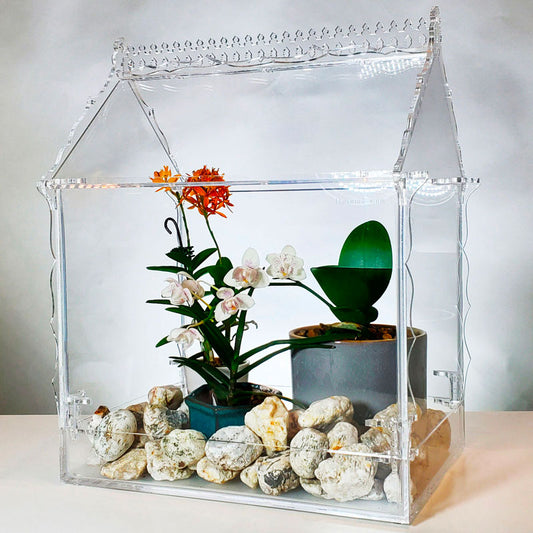
No, it’s not mandatory. However, it performs best in environments where humidity is naturally higher and air movement is constant. In very dry indoor air, a terrarium or enclosed growing space can make long-term care much easier.
FAQ // Can Comparettia speciosa be grown mounted?
Yes, and it often thrives when mounted. That said, mounted plants require very frequent watering and should never stay dry for long. This option works best if you can water often and maintain good humidity.
FAQ // How often should I water Comparettia speciosa?
Water regularly and evenly. The roots should be allowed to approach dryness, but not remain dry for extended periods. Mounted plants may need watering several times per week.
FAQ // Does Comparettia speciosa need a rest period?
No true rest period is required. Unlike some orchids, this species prefers steady care year-round rather than cycles of heavy drying or reduced watering.
FAQ // Can it rebloom from the same flower spike?
Yes, it can. For this reason, I avoid cutting the inflorescence immediately after flowering unless it is completely dry.
FAQ // Why do some plants decline after flowering?
This species can be short-lived if stressed. Decline is usually linked to low humidity, poor air movement, excessive dryness, or heat stress, especially after blooming.
FAQ // Is Comparettia speciosa suitable for beginners?
It’s better suited to intermediate growers or beginners who already manage humidity and airflow well. It’s not difficult, but it does require attention to environmental stability.

I’m Christian.
I’ve been growing orchids for many years, with a strong interest in species orchids and their natural behaviors in cultivation. I share my observations, practical experience, and what I learn through trial, patience, and careful study, without shortcuts.
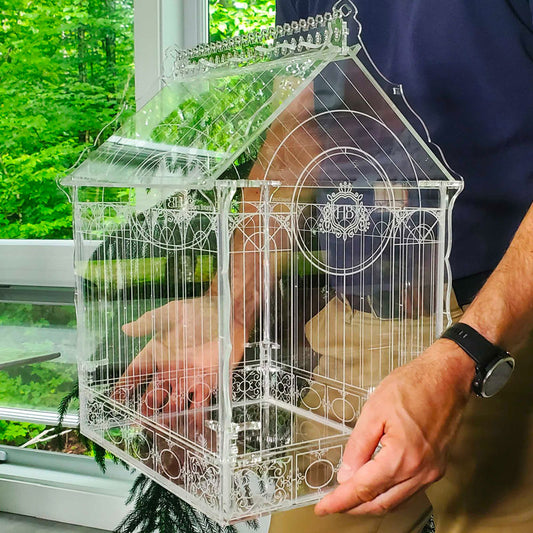
Alongside my collection, I design and build terrarium-style mini greenhouses inspired by Wardian cases, created to provide stable, controlled environments for orchids that benefit from higher humidity and consistency.
If you have questions about cultivation or growing setups, feel free to reach out. I’m always happy to exchange and help fellow orchid growers refine their approach.
References
-
Kew: Plants of the World Online (POWO)
Taxonomy, accepted name, native range and plant information. - OrchidCulture (Charles & Margaret Baker): Comparettia speciosa culture sheet (free)
Conclusion
Comparettia speciosa is not an orchid that asks to be pushed or optimized. It asks to be understood. In my experience, when its basic needs are met, humidity, regular watering, gentle light, and stability, it grows and flowers without drama.
What I appreciate most about this species is its balance: small in size, yet visually striking when in bloom; delicate in appearance, yet surprisingly resilient when treated with consistency. It’s an orchid that fits perfectly into a thoughtful collection, especially for growers who enjoy observing rather than forcing results.
Grown with patience and restraint, Comparettia speciosa becomes a quiet but memorable presence, one that reminds me why I value species orchids and their natural rhythm so much.